
The Hidden Exhaustion of Being the Dependable One: Why Capable People Still Need Care and Support
In almost every family, workplace, and friend group across South Etobicoke, Mimico, New Toronto, and the Greater Toronto Area, there is one person everyone instinctively turns to when plans unravel or crises emerge. You are known as the organized one, the dependable one, and the person who always figures things out regardless of how chaotic life becomes.

Physical Symptoms of Anxiety in High Pressure Moments: How Supporting Your Body Helps You Stay Present
When people across South Etobicoke, Mimico, New Toronto, and the Greater Toronto Area picture anxiety, they typically imagine an endless loop of racing thoughts, relentless overthinking, and worst case mental scenarios. While cognitive worry is certainly one common expression of anxious distress, anxiety frequently bypasses conscious thought altogether and manifests directly inside the physical body. In an important workplace presentation, a difficult relationship conversation, or an unexpected confrontation, anxiety often arrives suddenly as a completely blank mind, a tight chest, shaky hands, or an inability to find your words.

Psychotherapy versus Coaching in South Etobicoke: Choosing the Right Support for Your Personal Growth
When individuals across South Etobicoke, Mimico, New Toronto, and the Greater Toronto Area begin searching for professional support, they frequently encounter two distinct terms used almost interchangeably: psychotherapy and coaching. While both modalities empower personal development, self awareness, and meaningful life improvement, they serve fundamentally different purposes in your wellness journey.

The Human Side of Healing: Why Knowing Emotional Lessons Doesn't Mean We Stop Needing Reminders
In a fast paced urban environment like Toronto, high achieving professionals, busy parents, and empathetic caregivers often carry an unfair expectation of emotional perfectionism. Many individuals believe that once they intellectually understand a psychological concept, such as setting healthy boundaries, saying no without guilt, or practicing self compassion, they should automatically execute it effortlessly every single day.

Building Quiet Confidence: How Rebuilding Self Trust Transforms Decision Making
In a culture obsessed with absolute certainty, many high achieving individuals in Toronto believe that self trust requires unwavering confidence before taking any step forward. When faced with major career pivots, personal boundary setting, or relationship choices, people often pause, waiting for a dramatic epiphany that promises total safety. However, self trust rarely arrives as a sudden lightning bolt of absolute clarity. More often, it emerges quietly in the subtle ways you begin honoring your internal reactions, making everyday decisions, and needing less external validation.
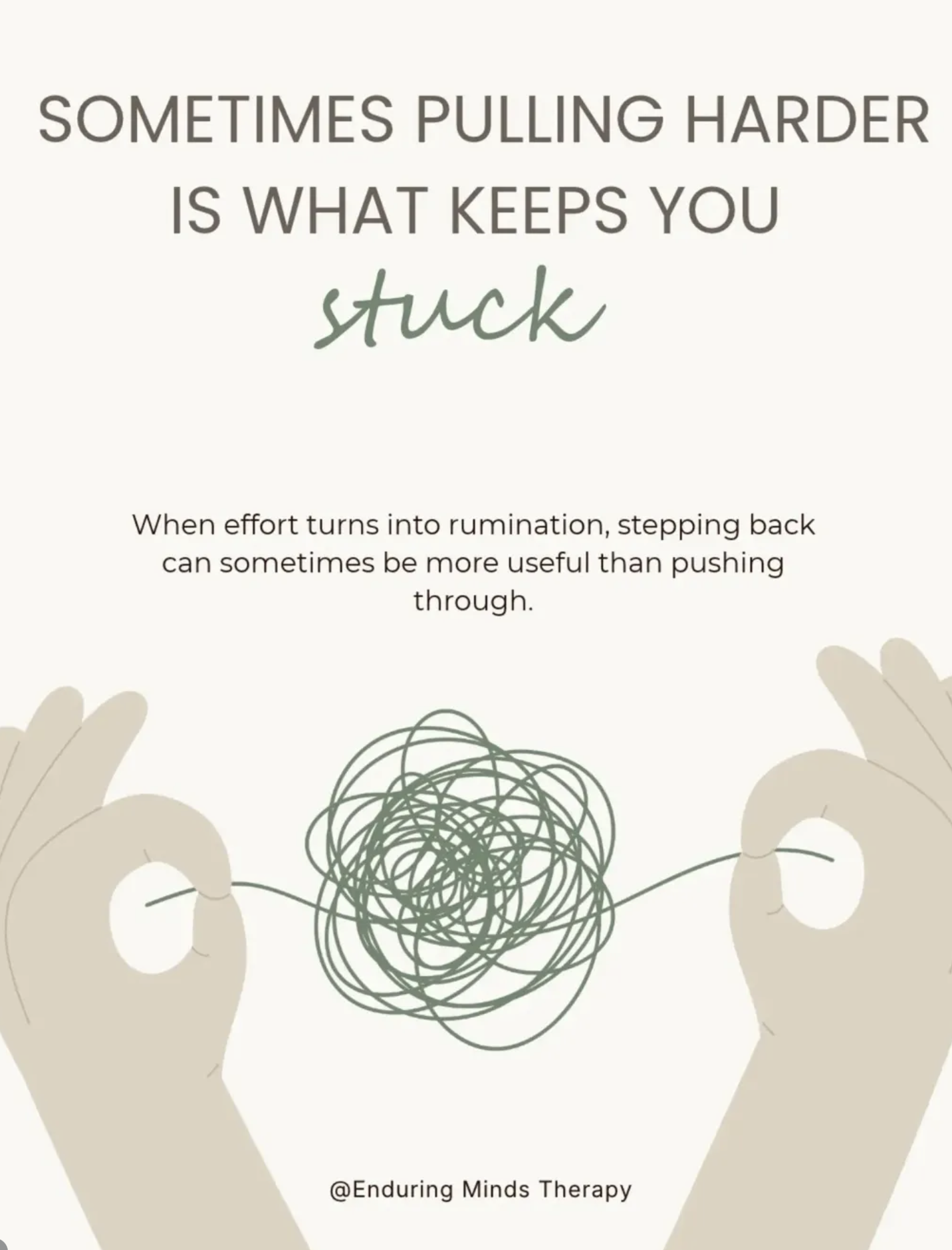
Breaking the Overthinking Loop: How Stepping Back Restores Mental Clarity
In a fast paced environment like Toronto, many high achieving individuals operate under the belief that every complex emotional challenge or life decision can be solved through sheer intellectual determination. When faced with uncertainty, relationship strain, or career transitions, the automatic response is often to think a little harder, analyze a little longer, or keep pushing forward with relentless energy. However, mental effort does not scale linearly with problem solving clarity. In many cases, applying more intellectual force serves only to keep the mind tightly tangled in an exhausting internal loop.

Unmasking Subtle Perfectionism: Understanding Hidden Signs and Cultivating Self-Compassion
When people picture perfectionism, they often imagine pristine color coded calendars, spotless living spaces, or meticulously organized workstations. However, clinical psychology reveals that perfectionism frequently manifests in subtle, hidden behaviors that go completely unrecognized by the individual experiencing them. Far from being a mere desire for neatness or high achievement, perfectionism functions primarily as an underlying protective mechanism against vulnerability, criticism, and emotional discomfort.

Slowing Down Automatic Assumptions: How Mindful Communication Protects Relationships
Navigating interpersonal communication within close relationships often involves handling subtle nuances that can easily lead to misunderstanding. It is remarkably common for two people to walk away from the exact same conversation with completely different ideas about what transpired. A brief pause before answering, a slightly clipped sentence, or a shift in vocal tone can carry immense emotional weight, particularly when an individual is already managing anxiety, feeling overwhelmed, or experiencing uncertainty.

Recognizing the Signs: Is It Just a Bad Week or Time for Therapy?
Determining whether you are simply experiencing a challenging week or encountering deeper emotional distress is a subtle distinction that many individuals struggle to navigate. Life in Etobicoke and across Ontario brings daily pressures, from demanding careers and family responsibilities to relationship dynamics and personal expectations. While everyone encounters temporary setbacks, recognizing when persistent emotional weight signals a need for professional therapy allows you to take proactive steps toward healing and long term mental health.

A Softer Place to Begin
Finding a supportive therapy space offers a compassionate foundation for anyone navigating overwhelming stress, constant overthinking, and quiet emotional exhaustion. At Enduring Minds Therapy, I treat therapy as an open, grounded conversation rooted in clinical expertise and genuine human warmth rather than a rigid judgment or verdict.

Why You Replay Conversations in Your Head: Understanding Mental Rumination
Replaying past social conversations in your mind is a common psychological response where your brain attempts to scan for potential threats, seek certainty, and protect you from future awkwardness. Understanding that conversation replay is a protective safety mechanism rather than evidence of personal failure helps break the cycle of self criticism and chronic anxiety.