Why You Replay Conversations in Your Head: Understanding Mental Rumination
Replaying past social conversations in your mind is a common psychological response where your brain attempts to scan for potential threats, seek certainty, and protect you from future awkwardness. Understanding that conversation replay is a protective safety mechanism rather than evidence of personal failure helps break the cycle of self criticism and chronic anxiety.
Lying awake at night dissecting a brief interaction, analyzing an awkward pause, or wondering if a offhand comment came across poorly is a deeply frustrating experience. Many individuals mistake this constant mental looping for proof that they made a social blunder or acted inappropriately during their day. However, mental rumination is rarely about what actually happened during the interaction itself.
At Enduring Minds Therapy, we help clients across Etobicoke and Ontario understand the cognitive mechanics behind repetitive thoughts. When you analyze past conversations over and over, your nervous system is simply trying to keep you safe from perceived social rejection. Learning to recognize rumination as a survival strategy allows you to respond with self compassion rather than internal judgement.
Four Psychological Reasons Why Your Brain Replays Conversations
Mental replay is not a character flaw or a reflection of social incompetence. Psychologists recognize several underlying cognitive drivers that fuel repetitive social analysis:
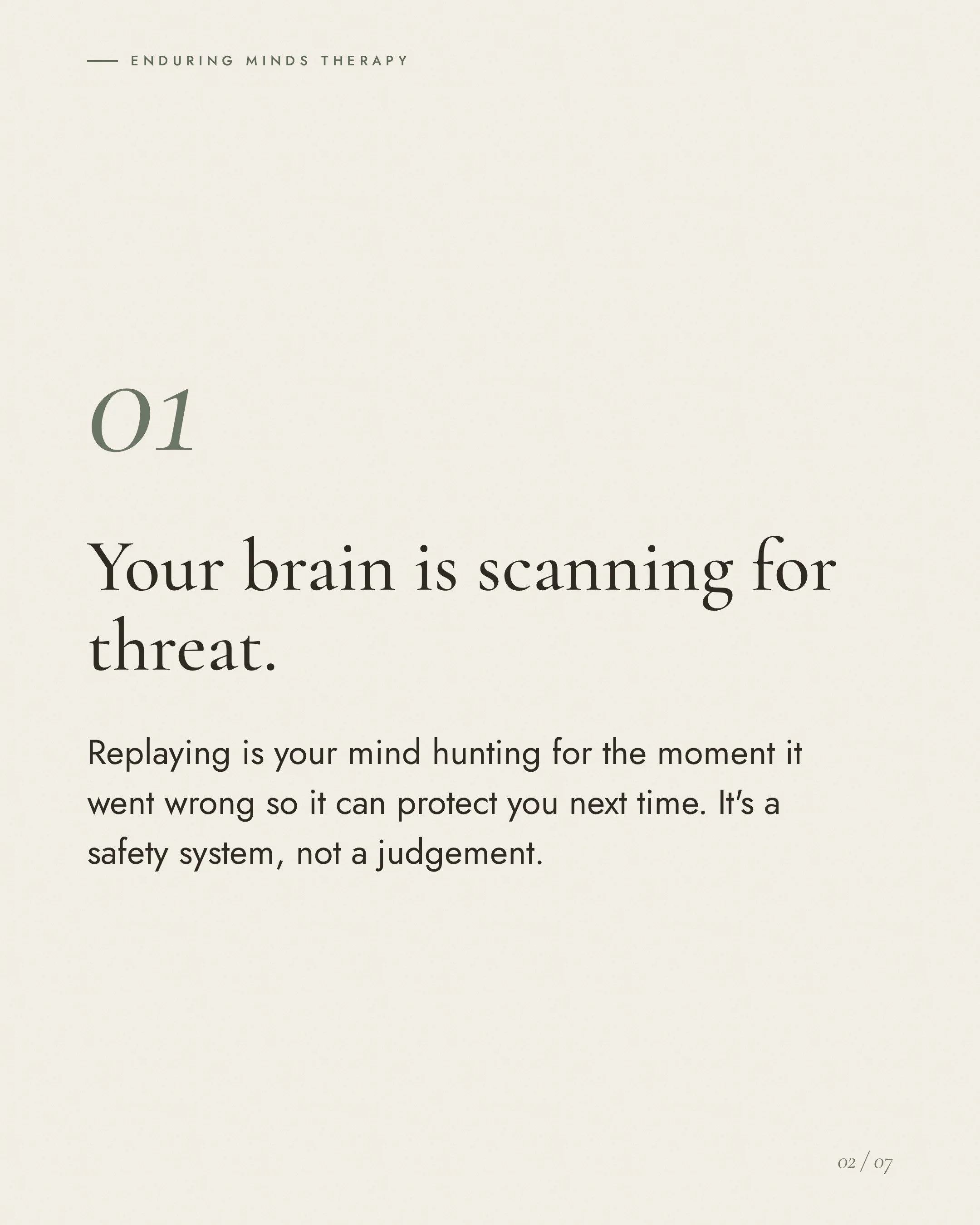
1. Your Brain Is Scanning for Potential Threats: Replaying interactions is your mind actively hunting for the exact moment something went wrong so it can protect you next time. It functions as an internal safety system rather than an objective judgement.
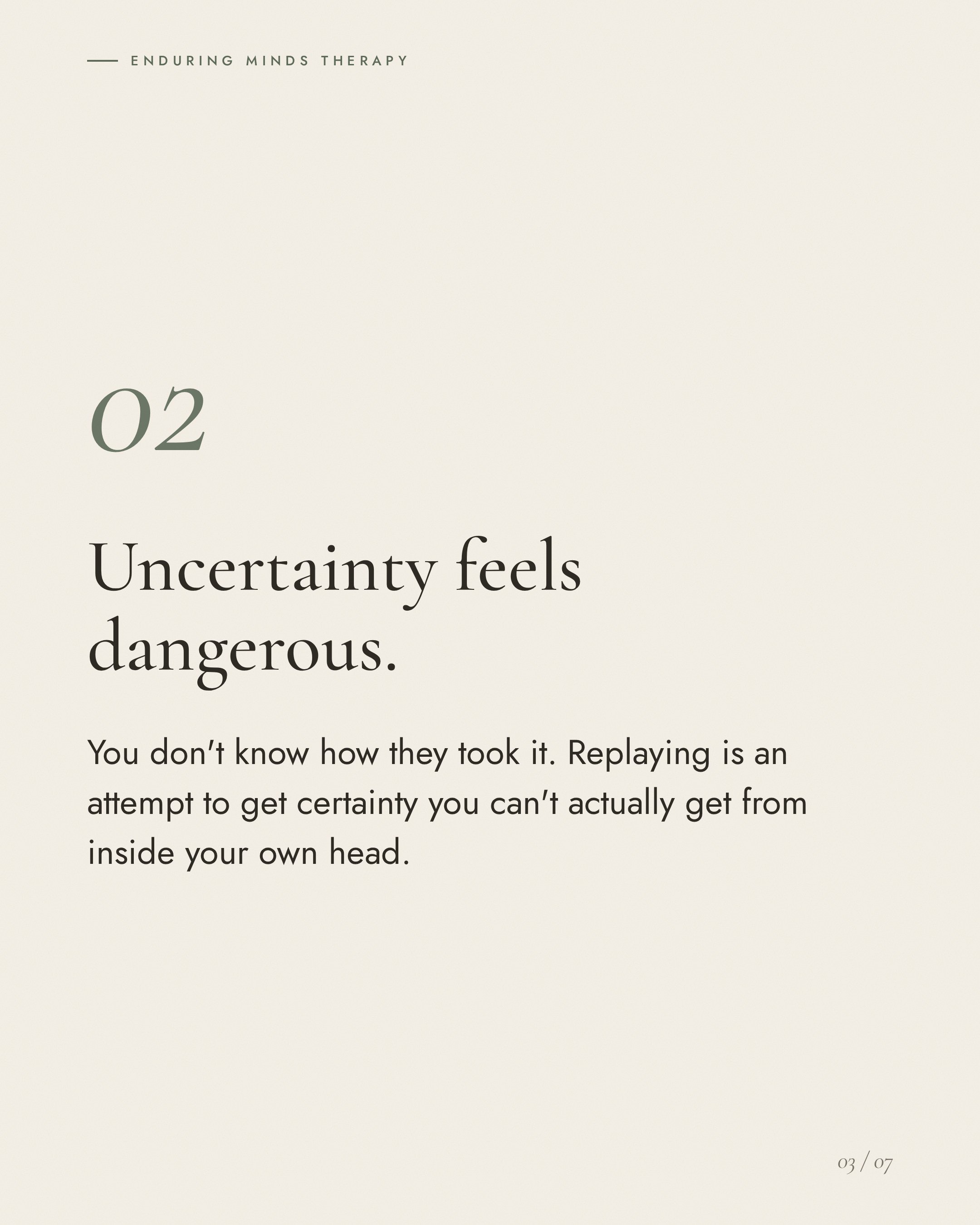
2. Uncertainty Feels Inherently Dangerous: You cannot know with absolute certainty how another person interpreted your words. Replaying the conversation is an attempt to gain certainty that you simply cannot get from inside your own head.
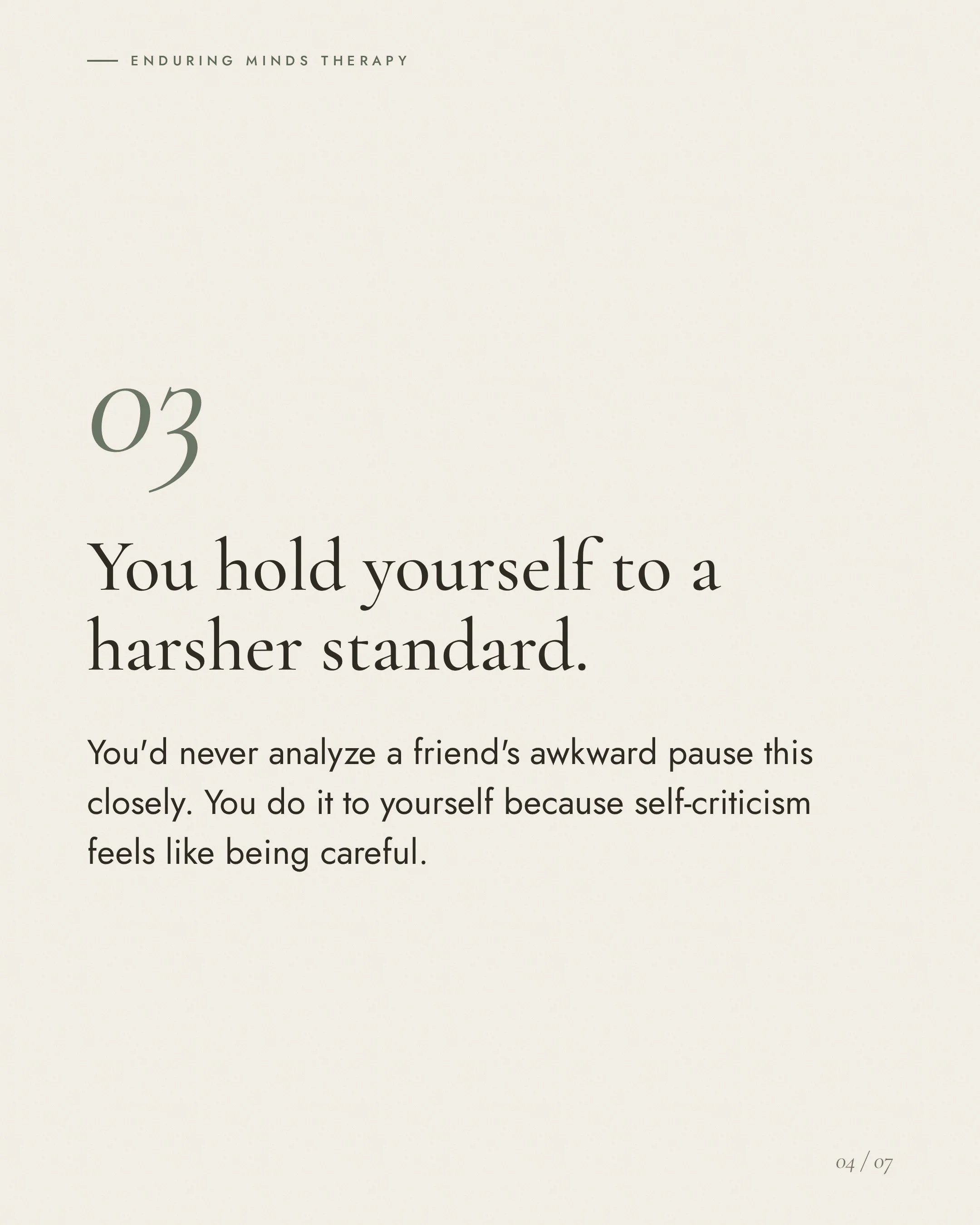
3. You Hold Yourself to a Harsh Standard: You would never analyze a friend's awkward pause or sentence slip as harshly as you examine your own. Self criticism often feels like being careful, but it actually reinforces anxiety.
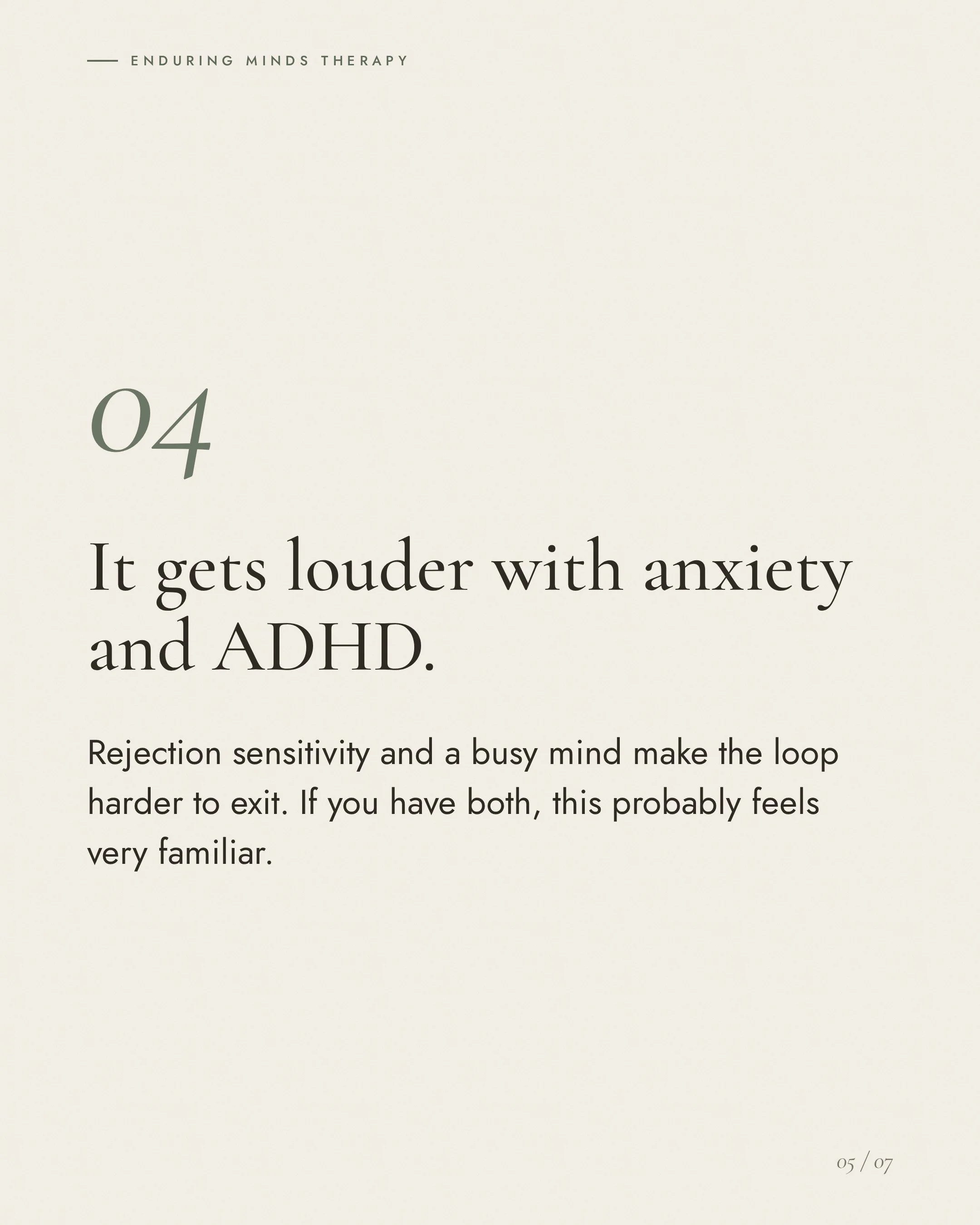
4. It Intensifies with Anxiety and ADHD: Rejection sensitivity and a busy mind make the mental loop much harder to exit. If you navigate neurodivergence or chronic anxiety, this pattern likely feels very familiar.
Recognizing these four psychological drivers takes the shame out of rumination, giving you the clarity needed to intervene when mental loops take over.
Practical Strategies to Stop Replaying Social Interactions
Interrupting mental replay requires actionable cognitive grounding techniques that gently shift your brain out of threat monitoring mode:
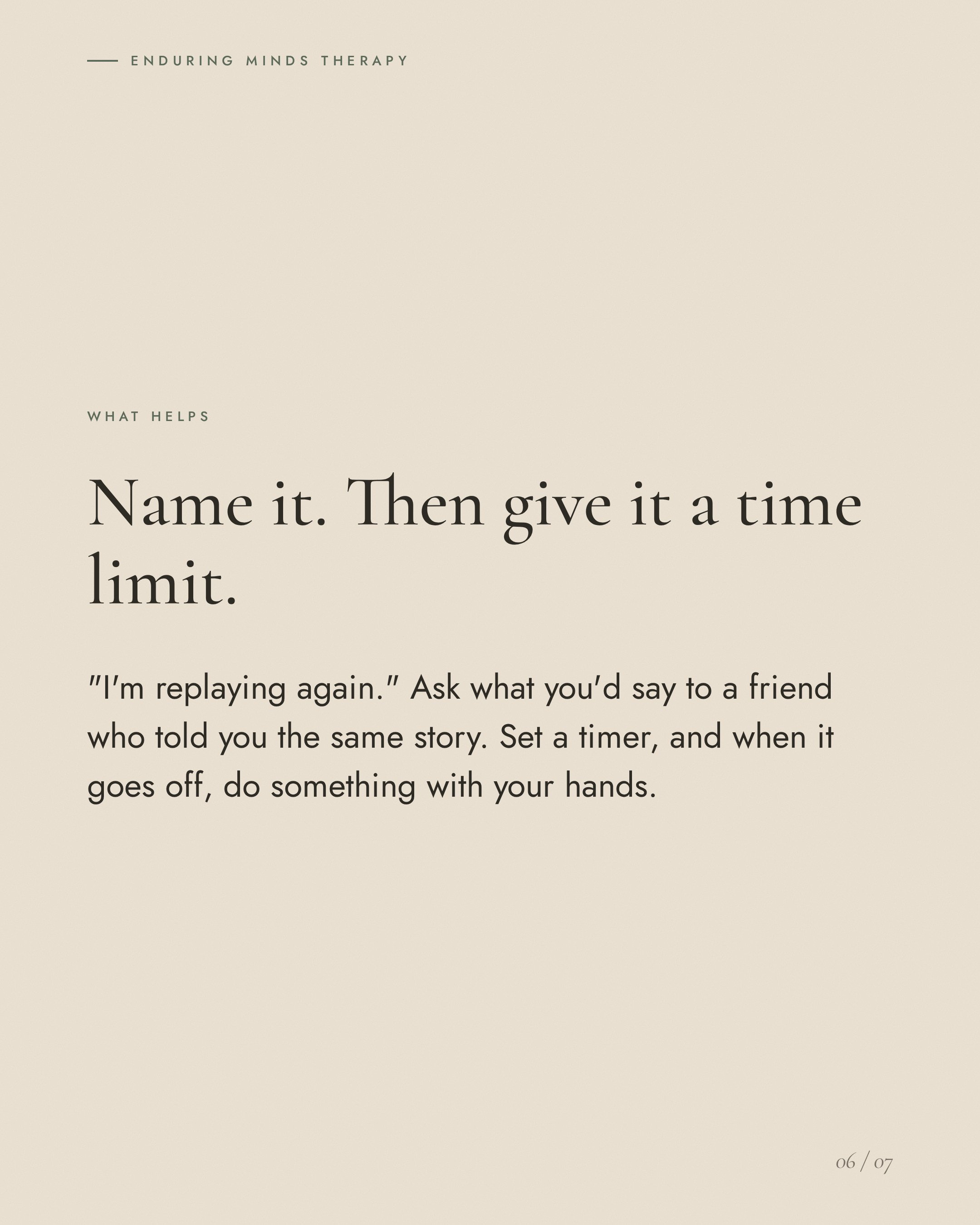
• Name the Rumination Explicitly: Acknowledge the loop aloud or internally by stating 'I am replaying again.' Labeling the thought pattern creates distance between you and the anxiety.
• Apply the Friend Perspective Test: Ask yourself what advice or grace you would offer a close friend who described the exact same interaction to you.
• Set a Strict Time Limit: Give yourself a defined two minute window to process the memory, set a timer, and commit to stepping away when it alerts.
• Engage Your Hands in Physical Activity: Shift mental energy into physical sensation by washing dishes, folding laundry, squeezing stress balls, or drawing.
Consistently applying these grounding exercises helps retrain your nervous system to release social hypervigilance.
How Therapy Helps Break the Anxiety and Rumination Cycle
When conversation replay runs most nights, finding a structured off ramp through professional psychotherapy provides long term relief. Working with a registered psychotherapist helps you uncover the root causes of social anxiety, rejection sensitivity, and self critical thinking.
Enduring Minds Therapy provides compassionate, evidence based mental health support for individuals in Etobicoke and across Ontario. For additional evidence based mental health resources on anxiety and neurodiversity support, explore public education guides from the Canadian Mental Health Association.
You do not have to navigate persistent anxiety loops on your own. If you feel ready to explore personalized therapy options, visit our page on cognitive behavioral therapy and anxiety services to learn how our team supports lasting emotional resilience.
How to Practice Gentle Mind Boundaries When Social Loops Start
Establishing gentle mental boundaries protects your evening rest and prevents late night overthinking:
• Write the Thought Down on Paper: Transferring the replayed interaction into a journal helps your brain recognize the thought as recorded and safe to drop.
• Focus on Somatic Grounding Exercises: Practice slow belly breathing or progressive muscle relaxation to signal physical safety to your central nervous system.
• Avoid Seeking Reassurance Repeatedly: Resist the urge to text friends asking if they are mad, as temporary reassurance reinforces the underlying anxiety loop.
• Offer Yourself Unconditional Grace: Remind yourself that minor conversational pauses are a normal part of human interaction, not social failures.
Practicing gentle mind boundaries reduces mental fatigue and helps restore peaceful evening routines.
Key Considerations for Managing Rejection Sensitivity and ADHD
Navigating rumination alongside neurodivergent traits or heightened social anxiety requires specialized care considerations:
• Understanding Rejection Sensitive Dysphoria: Recognize how neurodivergent brain chemistry can intensify emotional reactions to perceived social disapproval.
• Building Neurodivergent Friendly Coping Tools: Tailor grounding techniques to match your sensory preferences, using movement or tactile tools rather than passive meditation.
• Exploring Targeted Cognitive Behavioral Therapy: Work with therapists who specialize in ADHD and anxiety to build tailored emotional regulation strategies.
• Establishing Consistent Sleep Hygiene: Create calm pre bedtime routines that minimize screen time and reduce late night vulnerability to rumination.
Understanding the intersection of neurodiversity and mental health empowers you to navigate social interactions with self acceptance.
Frequently Asked Questions
Why do I replay conversations even when I know the interaction went well?
Your brain scans for subtle uncertainties to protect you from future social risks, often inventing imagined problems even when the actual interaction was positive.
Is replaying conversations a symptom of ADHD or anxiety?
Yes, conversation replay is very common in both anxiety and ADHD due to rejection sensitivity, racing thoughts, and difficulties with cognitive emotional switching.
How long does it take to break the habit of mental rumination?
With consistent mindfulness practice, somatic grounding, and therapeutic guidance, most individuals notice significant reductions in mental looping within a few weeks.
What should I do if mental conversation replay keeps me awake at night?
Get out of bed briefly, engage your hands in a quiet physical activity, write down the replayed thoughts in a journal, and return to bed only when sleepy.
Ready to Exit the Mental Loop?
If the conversation loop runs most nights, there is an off ramp. Book a discovery session with Emma at Enduring Minds Therapy today. No pressure, just a chance to see if it is the right fit for your mental health journey!
Contact me.
emma@enduringmindstherapy.com
(647) 691-8605